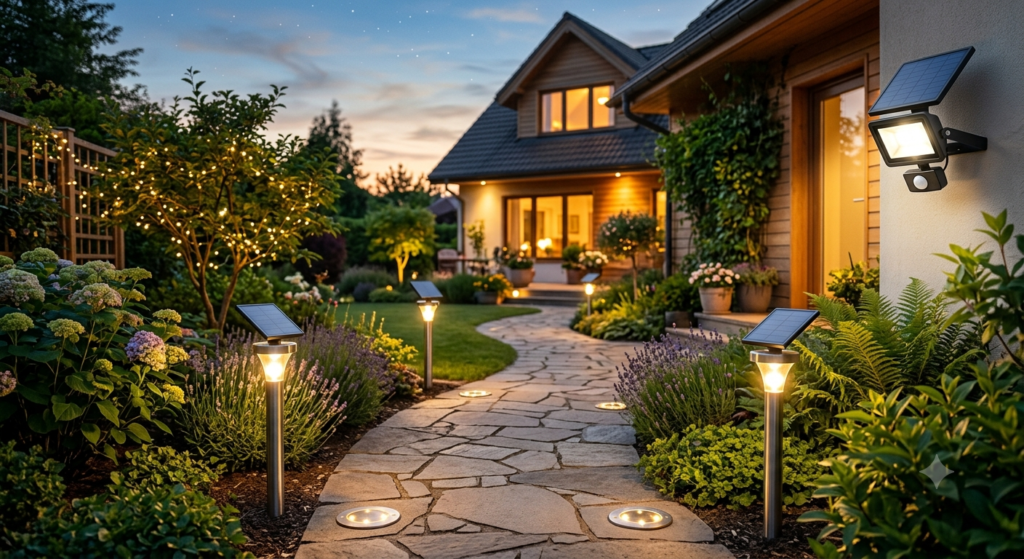
How to Choose Outdoor Solar Lights: A Complete Buyer’s Guide
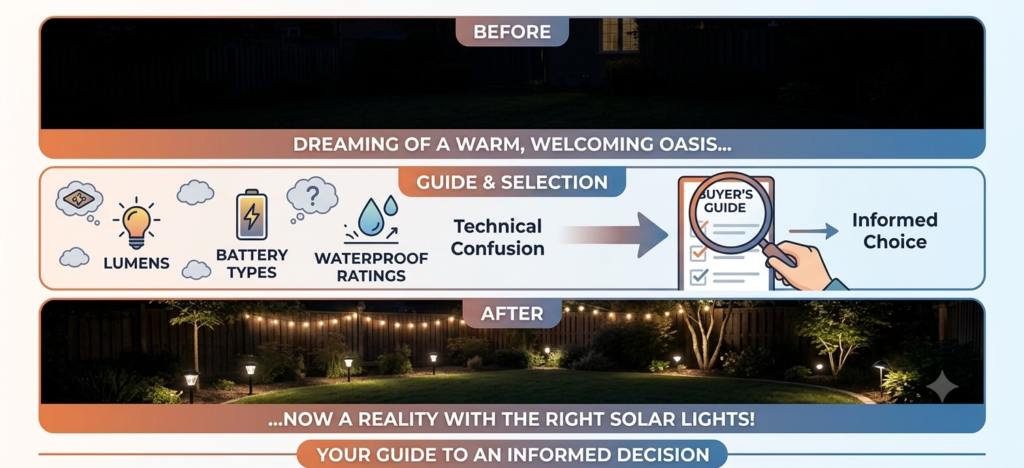
Imagine transforming your dark backyard into a warm, welcoming oasis—without adding a single penny to your monthly electricity bill. Sounds like a dream, right?
Thanks to modern outdoor solar lights, this is now a reality for millions of homeowners. They are eco-friendly, incredibly easy to install, and cost-effective. However, if you’ve ever browsed through online stores, you know how overwhelming the options can be. From lumens and battery types to waterproof ratings, the technical jargon can get confusing.
So, how do you choose the perfect solar lights for your outdoor space?
In this ultimate guide, we’ll break down everything you need to know to make an informed decision.
Step 1: Identify Your Purpose (The “Where” and “Why”)
Before looking at any specs, ask yourself: What do I need these lights to do? Outdoor solar lights generally fall into three main categories:
1. Accent Lighting (For Ambiance)
Best for: Creating a cozy atmosphere on patios, decks, or hanging from trees.
Types: Solar string lights, lanterns, and decorative fairy lights.
What to look for: Warm white tones (around 2700K) and unique designs that look good even during the day.
2. Path & Landscape Lighting (For Guidance)
Best for: Illuminating walkways, driveways, garden borders, and highlighting your favorite plants.
Types: Stake lights, in-ground disk lights, and spotlights.
What to look for: Durable materials that can withstand being stepped on or hit by lawnmowers.
3. Security & Flood Lighting (For Safety)
Best for: Brightening up dark corners, front doors, and garage entries to deter intruders.
Types: Solar motion sensor lights, floodlights, and wall packs.
What to look for: High lumen output and responsive motion sensors (PIR sensors).
Step 2: Decode the Tech Specs (What Makes a Solar Light Last?)
To ensure you get a product that doesn’t die after three months, check these four critical technical components:
1. Brightness (Lumens, Not Watts)
In the world of LEDs and solar, we measure brightness in lumens, not watts.
Path lights: 5 – 30 lumens (gentle guidance).
Landscape/Spotlights: 50 – 300 lumens (highlighting features).
Security lights: 500 – 1500+ lumens (ultra-bright coverage).
2. Solar Panel Type (Efficiency is Key)
The solar panel is the heart of the light. There are three main types:
Monocrystalline: The gold standard. They are the most efficient (15-21%) and charge well even on cloudy days. (Look for this for premium durability!)
Polycrystalline: Mid-range efficiency, budget-friendly, usually has a slight blue tint.
Amorphous (Thin-film): Lowest efficiency, typically used in very cheap decorative lights.
3. Battery Capacity & Lifespan
Solar lights store energy in rechargeable batteries. You want a battery with a high mAh (milliampere-hour) rating, which means it can store more power for longer winter nights.
💡 Pro Tip: Look for lights using Lithium-ion (Li-ion) or LiFePO4 batteries. They last significantly longer and hold a better charge than older Ni-MH batteries.
4. Weatherproofing (The IP Rating)
Outdoor lights must survive rain, snow, and heat. Check the IP (Ingress Protection) rating, which consists of two numbers (e.g., IP65):
IP44: Rainproof (good for basic garden accents).
IP65: Water-jet proof (ideal for path and wall lights, handles heavy rain easily).
IP67/68: Waterproof (can be submerged; perfect for ground lights or poolside).
Step 3: Consider Material and Durability
Since your lights will live outdoors 24/7, material matters.
Plastic: Budget-friendly and rust-proof, but cheap plastic can degrade and crack under intense UV sun exposure. Look for ABS plastic with UV resistance.
Stainless Steel / Aluminum: Sleek, modern, and highly durable. Excellent for premium landscape and security setups because they handle weather elements beautifully.
Step 4: Smart Features to Look Out For
Modern solar lights are getting smarter. Look for these value-added features:
Auto On/Off (Dusk-to-Dawn): Built-in photocells that automatically turn the lights on at sunset and off at sunrise.
Motion Sensors: Great for security lights to save battery power when no one is around.
Adjustable Design: Panels and light heads that can be rotated independently so you can catch the sun perfectly while aiming the light exactly where you need it.
Final Checklist Before You Click “Buy”
Before checking out, run through this quick checklist:
Sunlight Check: Does the spot you want to illuminate get at least 6-8 hours of direct sunlight daily? (If it’s shady, look for solar lights with detached solar panels you can place in the sun).
Warranty: Does the brand offer at least a 1-year warranty? (A good indicator of quality control).
Return Policy: Just in case the color temperature isn’t exactly what you pictured.
Conclusion
Choosing the right outdoor solar lights comes down to balancing functionality with quality components. Investing a little more upfront in high-efficiency monocrystalline panels, strong IP65 weatherproofing, and reliable lithium batteries will save you money and headaches down the road.
Ready to light up your night? Explore our latest collection of premium, weather-resistant outdoor solar lights designed to elevate your home’s curb appeal effortlessly.